

Urban flooding is rarely caused by one factor. Intense rainfall, extensive paved surfaces, insufficient drainage capacity, blocked pathways, reduced infiltration, and uncontrolled runoff can all contribute. For property owners and developers, Flood Mitigation in Pune therefore starts with understanding how rainwater behaves after it reaches a site.
As cities develop, natural ground surfaces are increasingly replaced by rooftops, roads, parking areas, paving, and buildings. Rain that previously infiltrated into soil can move rapidly across these impermeable surfaces and reach drains within a short period.
This creates a simple problem: more water reaches the drainage system faster.
Site-level rainwater management can help reduce this pressure by capturing, temporarily storing, slowing, infiltrating, or redirecting runoff in a controlled manner.
Different projects may use different combinations of measures, including:
Rainwater storage
Detention or attenuation systems
Infiltration areas
Bioswales
Ecological drainage channels
Pond development
Permeable landscaped zones
Planned overflow routes
The appropriate combination depends on the site.
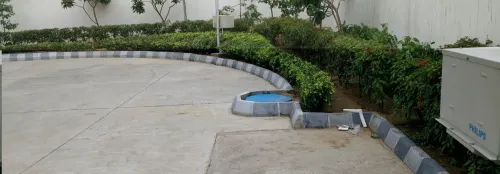
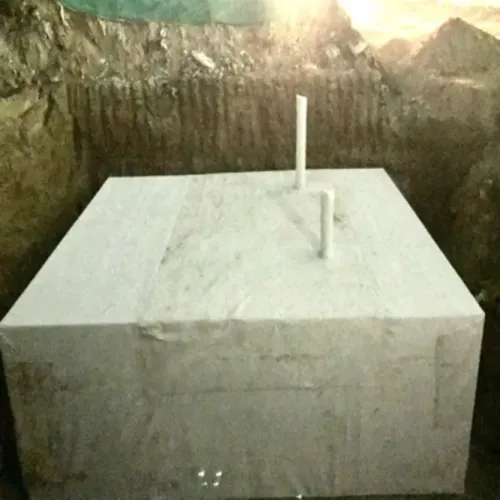
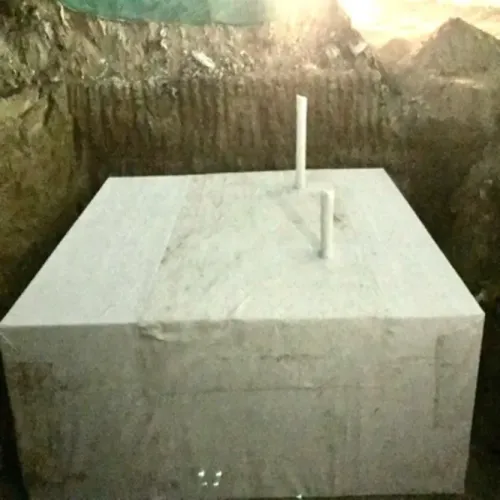
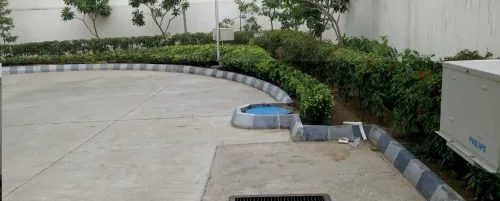
For example, an underground storage system can temporarily retain water that would otherwise immediately enter a drain. If some stored water is subsequently reused, capacity becomes available for future rainfall.
Landscaped water-management features provide another approach. A bioswale can be designed to receive and slow surface runoff while vegetation and engineered soil layers support filtration and infiltration where conditions permit. Similarly, ecological channels can provide more environmentally integrated pathways for moving water across suitable sites.
Ponds can also form part of broader stormwater strategies for larger developments. Depending on their design, they may support detention, landscape integration, ecological functions, or water storage.
No individual feature should automatically be described as a complete flood-prevention solution. Severe rainfall can exceed the design capacity of almost any site system. The practical objective is to manage runoff more effectively and reduce unnecessary peak discharge where feasible.
Pune’s monsoon conditions make this especially relevant. A site may remain relatively dry for months and then experience concentrated rainfall events. Drainage systems therefore need to account for peak conditions rather than average annual rainfall alone.
Good flood-mitigation planning begins with questions such as: Where does runoff originate? Where does it currently accumulate? Which areas are impermeable? How much temporary storage is feasible? Where can overflow safely travel? Can landscape features be used to slow runoff?
RETAS ENVIRO SOLUTIONS PRIVATE LIMITED operates in rainwater and environmental water management, with solutions relevant to properties considering integrated runoff-management measures in Pune and other Maharashtra locations.
For properties experiencing recurring water accumulation or high stormwater discharge, Retas can help evaluate Flood Mitigation options in Pune that combine storage, drainage, and ecological water-management principles according to site requirements.